How Pinterest Pins Quietly Become Income Streams
Why the smartest creators treat Pinterest as a system, not a social feed
Most people think Pinterest is just a place for recipes, mood boards, and aesthetic inspiration.
But quietly, behind the scenes, some creators are using it very differently. Not as a social media platform — as the first step of a system. A system that keeps working long after the pin is published.
And the interesting part? Many of these creators are building income without constantly posting, going viral, or even showing their face.
The biggest misunderstanding about Pinterest
Most beginners think the goal is simple: get more views.
So they post random pins, chase trends, redesign graphics endlessly, and hope something suddenly “takes off.”
But attention alone doesn’t create income, because traffic without direction usually disappears. A person clicks, reads for a few seconds, leaves — and never comes back.
That’s why some creators rack up thousands of impressions but see almost no actual results. The problem usually isn’t Pinterest itself. It’s the missing system behind the pin.
The real purpose of a pin
Here’s the shift that changes everything: a pin isn’t supposed to do everything.
Its job is simply to create curiosity, recognition, and just enough emotional interest for someone to click. That’s it.
The mistake most people make is expecting the pin itself to generate income instantly. But the creators quietly making sales from Pinterest understand something different:
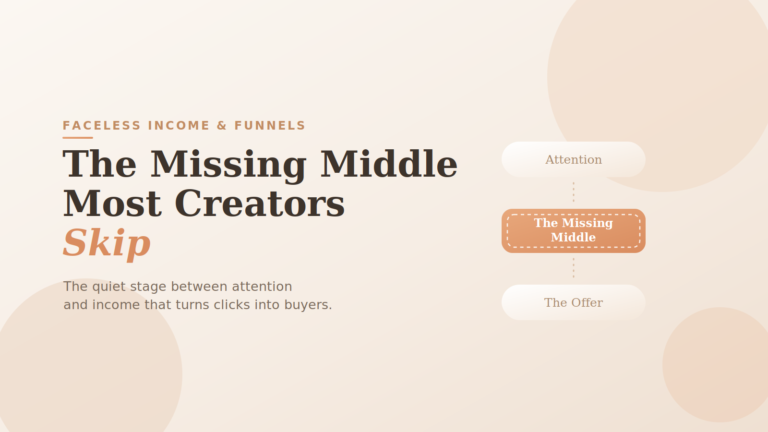
The pin starts the journey. The funnel continues it.
The simple Pinterest funnel most creators ignore
Here’s what the system often looks like:
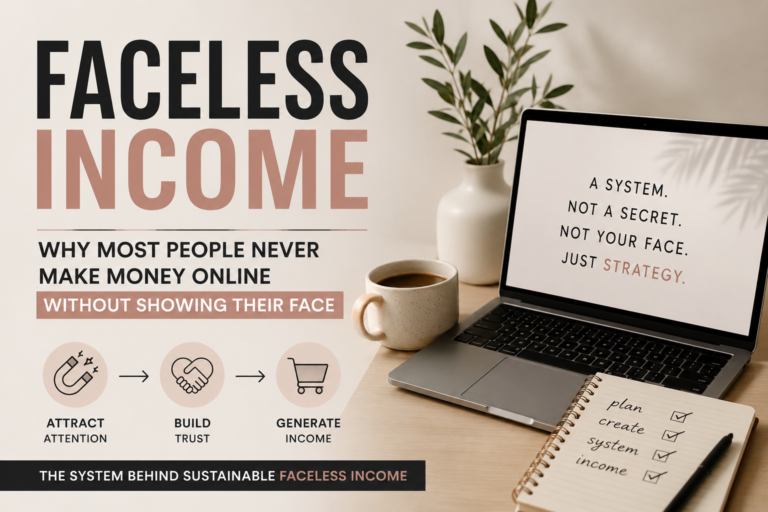
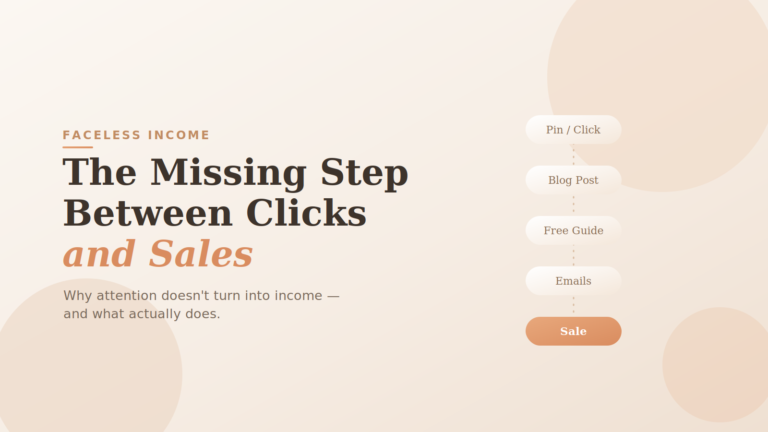
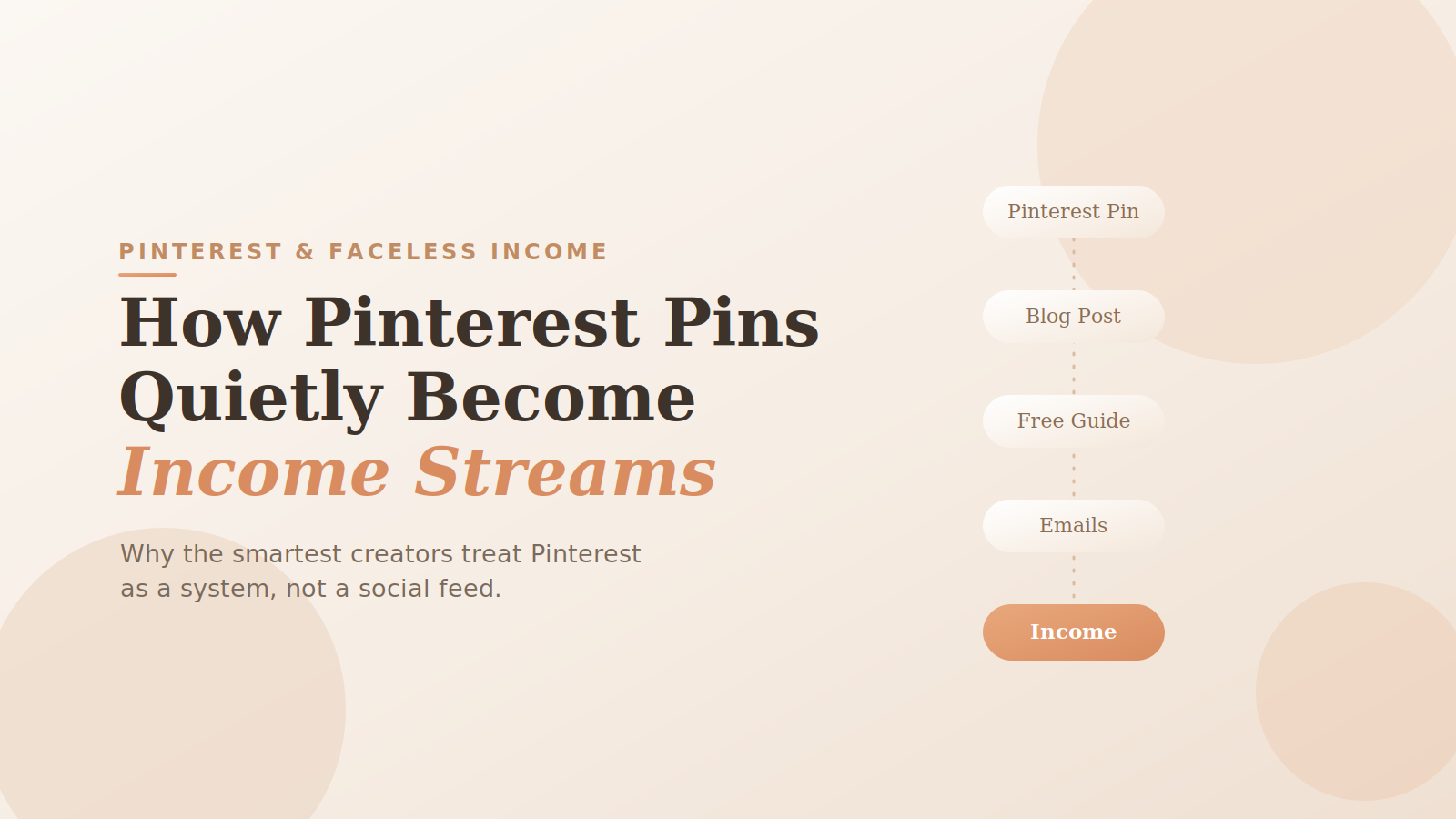
Pinterest Pin → Blog Post → Free Guide → Email Sequence → Offer
Simple. But psychologically, each step does something important.
The pin creates curiosity
A strong hook interrupts the scroll — not with pressure, but with relevance. The person sees something that makes them think, “Wait… this sounds like me.” That moment of emotional recognition is what earns the click.
The blog builds understanding
This is the step most creators skip, and it’s a costly one. Blogs are powerful because they slow people down.
Instead of random scrolling, short attention spans, and fragmented content, the blog creates depth. It gives context, trust, emotional clarity, and understanding. The reader starts thinking, “This actually makes sense” — and that’s a huge psychological shift.
The free guide builds trust
At this point the person is interested, but not fully ready. The freebie acts like a bridge. It lets you help first, create real value, and continue the conversation outside Pinterest.
This is where your audience starts becoming a genuine community instead of random traffic.
The emails create relationship
This is where most of the trust gets built — not through hard selling, but through clarity, storytelling, education, and consistency.
Instead of constantly chasing the next viral moment, you now have a system that keeps nurturing people automatically. And over time, some of them naturally become buyers.
Why this works so well for faceless creators
This kind of funnel is especially powerful for faceless businesses, because it doesn’t rely on constant visibility, daily posting pressure, or aggressive sales tactics. The system itself does the heavy lifting.
A well-positioned pin can bring traffic for months, feed the funnel continuously, and slowly compound trust over time. That’s very different from platforms where content vanishes after 24 hours.
Pinterest behaves more like a search engine than traditional social media — which means one thoughtful piece of content can keep working quietly in the background.
The truth most people don’t realise
The creators making consistent income from Pinterest usually aren’t posting randomly, chasing motivation, or relying on luck.
They’re guiding people through a psychological path: from curiosity, to understanding, to trust, to readiness.
That’s what a funnel actually is. Not pressure. Not manipulation. Just structure.
Final thoughts
Pinterest becomes far more powerful the moment you stop treating it like random content posting.
Because the goal isn’t “get clicks.” The goal is to build a system that keeps the conversation going after the click. That’s where trust is built — and eventually, that’s where income comes from too.
Want to see the exact Pinterest funnel structure?
I created a free guide called the Faceless Income Starter Blueprint that breaks down the simple Pinterest funnel structure, how faceless creators build trust, how pins connect to blogs and email funnels, and how the whole system can quietly grow over time.
Download the free guide and start building a Pinterest system instead of posting blindly.