The Internet Lied About YouTube Passive Income
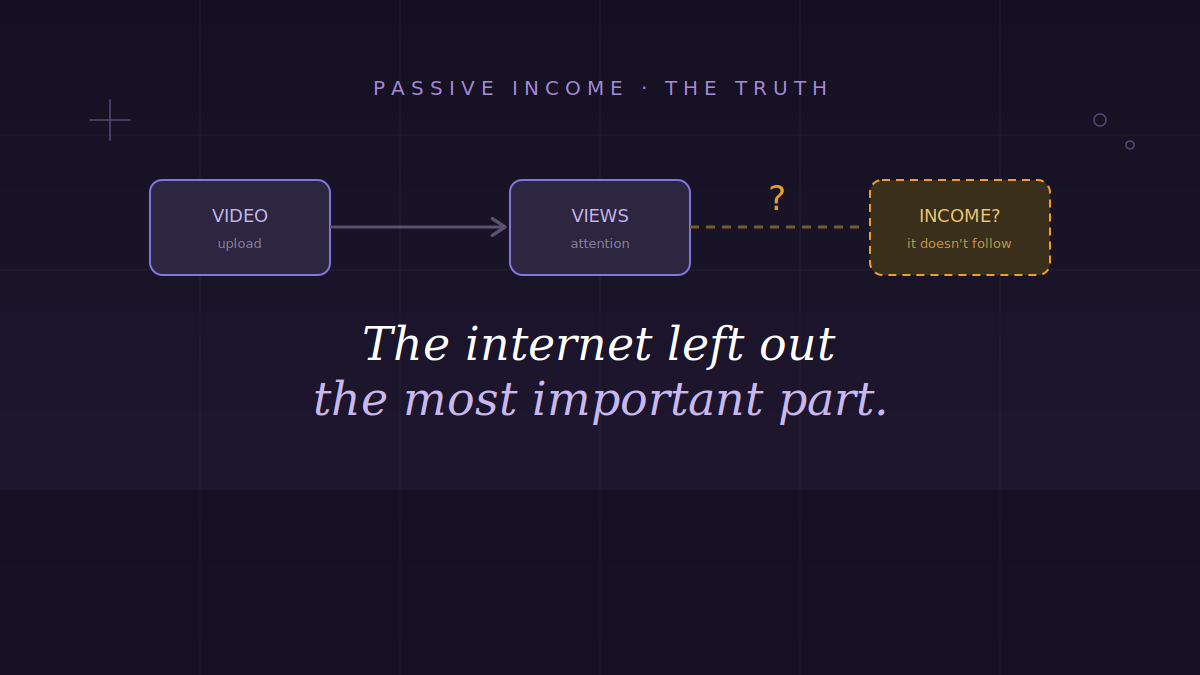
For years, I thought YouTube passive income worked like this: create a video, upload it, get views, make money. Simple. At least that’s what the internet kept telling me.
Everywhere I looked, I saw screenshots of views, subscriber counts, and revenue dashboards. The message was always the same — get enough views and the money will follow.
So naturally, I focused on views. I obsessed over thumbnails. I worried about algorithms. I spent hours researching viral topics. And yet, something felt off.
Because when I looked closely at successful creators, I noticed something strange. The channels making real money weren’t just creating videos. They were building systems. And that’s the part almost nobody talks about.
The Problem Isn’t Your Videos
Most beginners assume their biggest challenge is creating content. But content isn’t usually the problem. The real problem is what happens before and after the video.
Before the video:
- Did you choose the right niche?
- Do people actually want this content?
- Can you create it consistently?
After the video:
- What happens when someone watches?
- What makes them come back?
- What turns a viewer into a subscriber?
- What turns a subscriber into a customer?
Without answers to those questions, even good videos struggle.
Views Are Not a Business Model
This is where many creators get stuck. A video gets views — maybe even thousands of views. But nothing changes. No predictable growth. No audience loyalty. No real income.
Because views alone are not a business model. They’re attention. And attention is only valuable when it flows somewhere.
Imagine pouring water into a bucket with holes. You can keep adding more water, but the bucket never fills. That’s what many YouTube channels look like. More views. More effort. The same results.
What Actually Creates Momentum
The creators who grow fastest usually have a simple system. First, they choose a niche people already care about. Then they create content that solves a specific problem or satisfies a specific curiosity. Next, they guide viewers deeper into their ecosystem.
One video leads to another. One topic leads to another. One viewer becomes a subscriber. A subscriber becomes part of an audience. An audience becomes a business. That process doesn’t happen by accident — it’s designed.
The Missing Piece: A Content Funnel
Most people hear the word funnel and immediately think of sales pages. But a content funnel starts much earlier.
A stranger discovers one of your videos. They become interested. They watch more. Trust begins to build. Eventually, they’re ready to take the next step. The video wasn’t the destination — it was the entry point.
That’s why some channels stay stuck at a few hundred views while others seem to grow endlessly. The difference isn’t always better editing. It’s usually better structure.
Why Faceless YouTube Works So Well
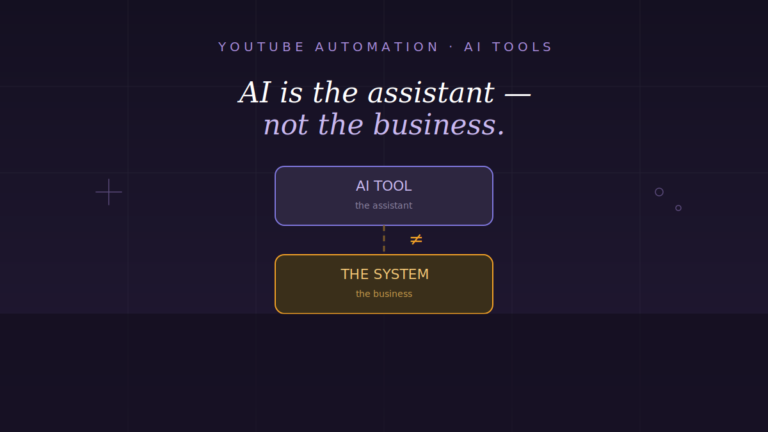
This is exactly why faceless YouTube automation has become so powerful. When you stop thinking like a creator and start thinking like a system builder, everything changes.
Instead of asking “What video should I make today?” you start asking “What system am I building?” The niche becomes clearer. Content ideas become easier. Scripts become faster. Growth becomes more predictable. And suddenly, you’re no longer chasing views — you’re building an asset.
The internet didn’t exactly lie about passive income. It simply left out the most important part. The money doesn’t come from the videos. It comes from the system behind them — the niche, the strategy, the content funnel, the structure.
Get those right, and every video works harder. Ignore them, and even great videos struggle. That’s why before you upload your first video, it’s worth understanding the foundation most creators skip.
Free Guide: Faceless YouTube Automation Starter Guide
If you want to build a faceless YouTube channel without showing your face, recording yourself, or spending hours editing — this guide reveals the first 3 steps successful faceless creators use before they upload their first video.