Why Most Faceless YouTube Channels Never Get Recommended (And It’s Probably Not What You Think)
You spend hours researching ideas, writing scripts, editing videos, and uploading consistently.
Then… almost nothing happens.
A few views.
Very little engagement.
No momentum.
If this sounds familiar, you’re not alone.
One of the biggest misconceptions about YouTube is that creating better videos automatically leads to more views. While quality matters, it’s rarely the reason a new channel succeeds or fails.
The truth is that YouTube doesn’t recommend videos simply because they’re well-made.
It recommends videos that send the right signals.
Let’s break down what that actually means.
The Biggest Myth About YouTube Growth
Most creators believe YouTube rewards effort.
So they try to:
- Upload more often
- Spend more time editing
- Make longer videos
- Buy better equipment
Unfortunately, none of these guarantees growth.
The YouTube algorithm doesn’t know how many hours you spent making your video.
It only knows how viewers respond after they see it.
That’s an important difference.
Why Great Videos Can Still Fail
Imagine creating the perfect video.
Excellent editing.
Useful information.
Great storytelling.
Now imagine almost nobody clicks on it.
If people don’t click, YouTube never gets enough data to know whether the video is actually good.
No clicks means:
- No watch time
- No audience retention data
- No recommendations
In other words, an amazing video can stay invisible simply because it never earned the first click.
The Four Signals That Drive YouTube Growth
Many creators think YouTube growth is random.
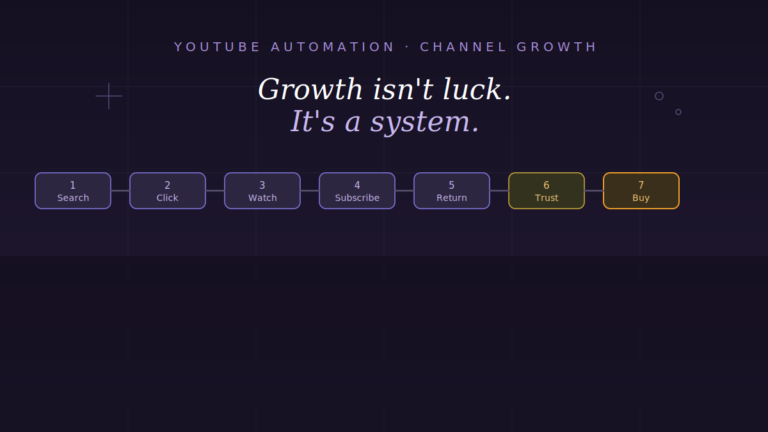
In reality, most successful channels follow a predictable sequence.
Step 1: Thumbnail
Your thumbnail grabs attention while viewers are scrolling.
Its job isn’t to explain the entire video.
Its job is to make someone curious enough to stop.
Step 2: Title
The title creates curiosity and sets an expectation.
Together, the thumbnail and title form what many creators call “packaging.”
Without strong packaging, even the best content struggles to get noticed.
Step 3: Watch Time and Audience Retention
Once someone clicks, YouTube measures how long they continue watching.
If viewers stay engaged, that’s a strong signal that your content satisfied their expectations.
The longer people stay interested, the more confidence YouTube gains in recommending the video to additional viewers.
Step 4: Recommendations
Only after YouTube sees positive viewer signals does it begin showing your video to larger audiences.
This is why successful channels often appear to “suddenly” explode.
In reality, they usually earned stronger signals long before the growth became visible.
Why Small Channels Should Stop Copying Big Creators
One mistake almost every beginner makes is copying creators with millions of subscribers.
It seems logical.
If they’re successful, why not do what they do?
Because they aren’t playing the same game.
Large creators already have:
- Brand recognition
- Loyal subscribers
- Viewer trust
- Years of data helping YouTube understand their audience
Small channels don’t have those advantages.
Instead of copying famous creators, smaller channels should focus on:
- A clearly defined niche
- Strong video packaging
- High-curiosity titles
- Consistent audience expectations
- Solving one specific problem per video
That’s how new channels build momentum.
Consistency Isn’t Enough
You’ve probably heard people say:
“Just stay consistent.”
Consistency is valuable.
But consistency without strategy simply means repeating the same mistakes more often.
Successful faceless YouTube channels don’t rely on motivation.
They rely on systems.
They know:
- What topics to create
- How to structure content
- How to package each video
- What viewers actually respond to
- How each video supports long-term channel growth
The system creates consistency—not the other way around.
The Good News
If your videos aren’t getting recommended yet, it doesn’t necessarily mean your content isn’t good.
It often means YouTube hasn’t received enough positive signals to confidently show your videos to more people.
That’s good news because signals can be improved.
A stronger thumbnail.
A better title.
Clearer positioning.
Higher audience retention.
Small improvements at each stage can completely change how your channel performs over time.
Download the Free YouTube Automation Blueprint
If you want to understand how successful faceless YouTube channels are structured from the ground up, I’ve created a free guide that walks you through the complete framework.
Inside, you’ll learn:
- How successful faceless channels choose video ideas
- The system behind YouTube recommendations
- Why packaging matters more than most creators realize
- Common mistakes that keep channels invisible
- A simple framework you can apply before publishing your next video
👉 Download the FREE YouTube Automation Blueprint and start building a YouTube channel based on strategy—not guesswork.