How to Connect Your Freebie to a Paid Offer Without a Hard Sell
A freebie and a paid product can both be useful and still fail to work together. The missing part is often the explanation of what the reader should do next. A useful bridge connects two tasks for the same person.
Start with one person and one stage
“People interested in online business” is too broad to guide an offer. A beginner choosing a business model has different questions from a creator with an email list and no product sales.
Describe the reader at the moment they request your freebie. What are they trying to do? What have they already done? What would be too advanced for them right now?
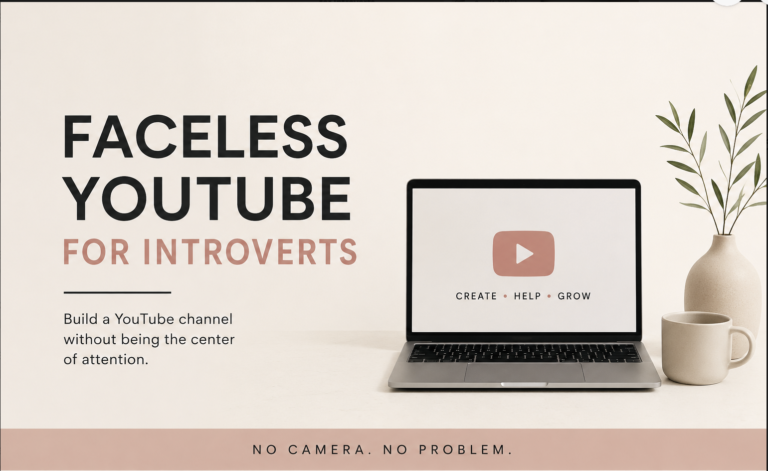
For example: “A beginner who wants to plan a faceless YouTube channel and has not published a video.” That reader needs a starting point. A diagnostic workbook for an existing sales funnel may be useful later, but it is not automatically the right immediate recommendation.
Use the free → next → paid map
- Free task: What can someone complete with the free resource?
- Next task: What becomes relevant after that?
- Paid support: Which specific parts of the paid product help with the next task?
Here is an illustrative match: a free worksheet helps someone choose one audience and draft three content ideas. Their next task is organising those ideas into a repeatable publishing plan. A paid content-planning workbook could supply a calendar, planning prompts and a review checklist.
Here is a mismatch: a free editing-app list leads straight to an advanced email-conversion workbook. The topics are related at a high level, but the reader has not been given a reason to make that jump.
Explain the difference between free and paid
Avoid relying on “more value” or a page count. Say what the reader will be able to work on.
- The free resource helps you choose a direction; the paid resource helps you build the plan.
- The free checklist helps you spot a possible issue; the paid workbook helps you investigate it and prioritise a fix.
- The free tutorial teaches one task; the paid system organises related tasks into a workflow.
Only use a distinction that is true for your products. A longer version of the same information may not be a meaningful next step.
Write a natural transition
Try this structure: “If you are now working on [next task], [product] includes [specific tools] to help you [practical outcome].” This makes the recommendation conditional on the reader’s situation.
For example, BehindTheCEO’s Views-to-Sales Fix is a 40-page diagnostic workbook for an existing audience-to-offer journey. It includes a Freebie-to-Offer Bridge Test, a Five-Email Conversion Framework and a Testing Tracker. It is a relevant next step for someone investigating where a funnel stops—not a promise that every new subscriber needs to buy immediately.
Let people see what they are considering
Show a real, readable sample of a worksheet you own, or describe a concrete exercise. Explain how someone would use it. A cover mockup communicates appearance; a useful preview communicates the work the resource helps them do.
Do not invent sample results, testimonials or screenshots. If you do not have a product preview ready, a precise contents list is better than an unrealistic example.
Audit your current bridge
Write one sentence for each of the three tasks above. Read them aloud in order. If you need a long explanation to connect them, simplify the path. You may need a different next-step product, a clearer explanation or more beginner support before making the offer.
You do not need to promote your whole collection in one email. A relevant recommendation is easier to understand than a menu of unrelated options.
Want a structured way to investigate?
Explore Views-to-Sales Fix, the BehindTheCEO 40-page diagnostic workbook. It includes a Funnel Leak Map, a Freebie-to-Offer Bridge Test, a Five-Email Conversion Framework and a Testing Tracker. Use it to organise your audit and choose what to work on next. It does not guarantee sales or income.
Read next: Email Opens but No Clicks? Make Your Next Step Clearer
One Comment