12 Best Faceless Business Ideas for Beginners
You do not need to become an influencer or share your personal life to build an online business.
Some of the best faceless business ideas use written content, branded graphics, email marketing, screen recordings, templates, or digital products instead of personal photos and talking-head videos.
But choosing a faceless model does not remove the need for trust, useful content, and a clear offer.
The goal is not to hide behind generic content. It is to build a recognizable brand in which the value comes from what the business provides—not from how much of your private life you share.
This guide covers 12 realistic faceless online business ideas, how each model can make money, and what a beginner needs to get started.
Affiliate disclosure: This article contains affiliate links. If you sign up or make a purchase through one of my links, I may earn a commission at no additional cost to you. I only recommend resources that I believe can genuinely help beginner online business owners.
What Is a Faceless Business?
A faceless business is a brand that does not depend on the owner’s face, name, or lifestyle to attract an audience.
Instead, the business is built around:
- A specific niche
- Helpful content
- A recognizable visual identity
- A product, service, or recommendation
- A system for attracting and serving customers
A faceless business can still have a clear personality and point of view. Your writing style, design, content standards, and customer experience become the recognizable parts of the brand.
You may still need to provide your legal identity to banks, payment processors, affiliate platforms, and tax authorities. “Faceless” describes how you market the brand publicly; it does not necessarily mean legally anonymous.
If you are starting from the beginning, read How to Start a Faceless Online Business for Beginners before choosing your model.
How to Choose the Right Faceless Business Idea
Do not choose an idea only because someone called it passive or profitable.
A better business idea fits four things:
Your preferred content format
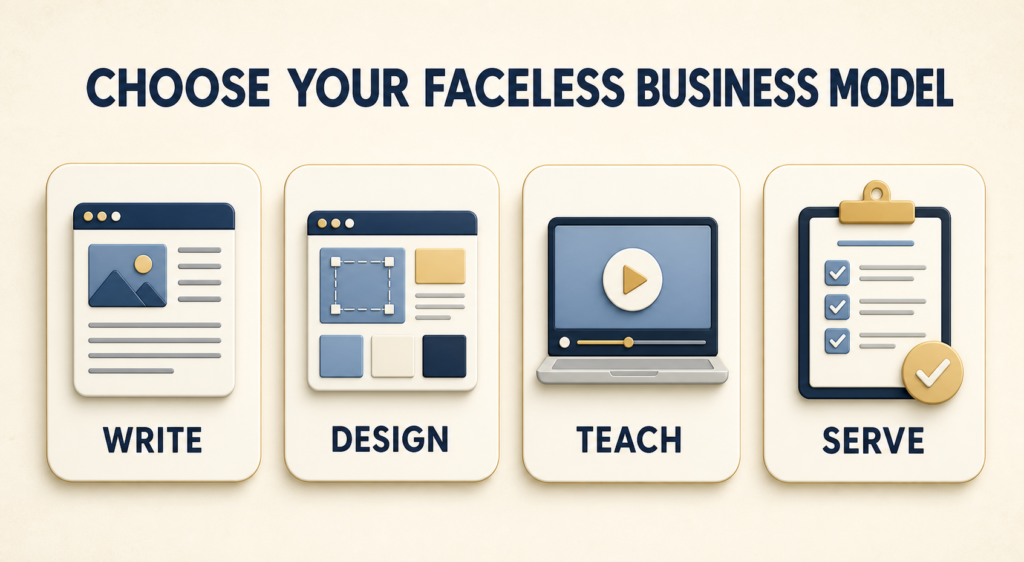
Would you rather write, design, research, organize information, record your screen, or create audio?
Choose a model that uses a content format you can realistically produce.
A specific audience problem
The business should help someone:
- Make a decision
- Save time
- Learn a skill
- Organize a process
- Find a suitable product
- Achieve a clear result
A realistic monetization method
Decide how the business could make money before building it.
Possible methods include:
- Affiliate commissions
- Digital-product sales
- Advertising
- Paid subscriptions
- Sponsorships
- Services
- Course or membership sales
A traffic source
Your business needs a way to be discovered.
Beginner-friendly options include:
- SEO blog content
- YouTube search
- Email marketing
- Online communities
- Search-friendly social content
Start with one primary traffic source instead of trying to master every platform.
1. Affiliate Marketing Blog
An affiliate blog publishes useful articles that help readers solve problems and choose suitable products.
You earn a commission when someone makes a qualifying purchase through your affiliate link.
Possible content includes:
- Product reviews
- Comparisons
- Step-by-step tutorials
- Resource lists
- Beginner guides
- “Best tools for…” articles
- Troubleshooting content
For example, a faceless-business blog can teach beginners how to build an email funnel and recommend the platform used in the tutorial.
Why it works as a faceless business
The content focuses on the reader’s question and the product—not on your appearance.
You can use written tutorials, screenshots, original graphics, diagrams, and product demonstrations.
What you need
- A focused niche
- A WordPress blog
- Keyword research
- Affiliate programs
- Clear affiliate disclosures
- An email list
- Helpful, original content
Best for
People who enjoy writing, researching, comparing products, and explaining how tools work.
Affiliate marketing is not simply placing links inside articles. You need relevant traffic and content that helps the reader make an informed decision.
2. Digital Download Shop
A digital download shop sells files customers can access immediately after purchase.
Products can include:
- Checklists
- Workbooks
- Planners
- Trackers
- Printable resources
- Swipe files
- Content calendars
- Business guides
- Prompt collections
Why it works as a faceless business
The product and its result are the focus. You can market downloads with mockups, Pinterest graphics, blog content, and email.
What you need
- One specific customer problem
- A genuinely useful download
- A sales page
- Product-delivery software
- A payment method
- Traffic from search, Pinterest, email, or social content
Best for
Beginners who enjoy organizing information and creating practical resources.
Start with one small product. Do not create a large bundle until you understand what the audience actually wants.
3. Template Business
Templates help customers complete a task faster without starting from a blank page.
You could sell:
- Canva templates
- Notion templates
- Spreadsheet systems
- Email templates
- Pinterest pin templates
- Social content templates
- Business document templates
- Website or landing-page templates
Why it works as a faceless business
You can demonstrate the template through screenshots, mockups, screen recordings, and examples.
The customer buys the system or design—not access to your personality.
What you need
- A specific use case
- A well-tested template
- Clear instructions
- Preview images
- A sales and delivery system
- Licensing terms explaining permitted use
Best for
People with design, organization, spreadsheet, or workflow skills.
A specific template is usually easier to market than a generic one. For example, “Weekly Planner” is broad, while “Weekly Pinterest Content Planner for Affiliate Bloggers” defines a clearer customer.
4. Niche Email Newsletter
A niche newsletter regularly sends useful information to a specific audience.
Possible newsletter concepts include:
- Curated industry news
- Weekly tool recommendations
- Remote-work opportunities
- Digital-product ideas
- Book summaries
- Productivity tips
- Niche market updates
- Local events or resources
A newsletter can earn through:
- Affiliate links
- Sponsorships
- Paid subscriptions
- Digital products
- Services
- Memberships
Why it works as a faceless business
The value comes from curation, analysis, and consistency.
You can publish under a brand name and use a consistent editorial voice without building the newsletter around personal photos.
What you need
- A narrow topic
- A clear newsletter promise
- An opt-in page
- Email-marketing software
- A repeatable publishing schedule
- A traffic source
Systeme.io combines landing pages, email campaigns, and basic automation in one platform, which can simplify the beginner setup.
Start your email list with Systeme.io for free →
5. Faceless Pinterest Content Brand
Pinterest works as a visual discovery and search platform.
A faceless Pinterest brand can publish pins that lead to:
- Blog articles
- Affiliate content
- Digital products
- Email opt-in pages
- Resource collections
- Tutorials
Potential niches include:
- Online business
- Home organization
- Recipes
- Personal finance education
- Travel planning
- Beauty
- Weddings
- Productivity
- Crafts
- Digital products
Why it works as a faceless business
Pinterest content can use typography, illustrations, product photography, mockups, and branded graphics instead of personal photos.
What you need
- A Pinterest business account
- A clear niche
- SEO-focused boards
- Original pin designs
- Keyword-rich titles and descriptions
- Useful destination pages
- A consistent publishing system
Do not repeatedly upload the same image. Create genuinely different visual and headline angles for each destination.
Best for
People who enjoy visual design, keyword research, and creating evergreen content.
6. Screen-Recorded Tutorial Channel
You can create tutorials without appearing on camera by recording your computer or phone screen.
Content ideas include:
- Software tutorials
- Canva tutorials
- Website setup
- Productivity workflows
- Spreadsheet tutorials
- Design demonstrations
- App walkthroughs
- Online-business systems
You can publish these tutorials on YouTube, embed them in blog posts, or use short versions on social platforms.
Why it works as a faceless business
The screen and process are the visual focus.
You can use:
- Voice narration
- Text captions
- Cursor highlights
- Background music
- On-screen instructions
Monetization options
- Affiliate marketing
- Advertising
- Sponsorships
- Courses
- Templates
- Consulting or setup services
Best for
People who are comfortable explaining a process but do not want to appear on camera.
Do not simply record yourself clicking through software. Give the tutorial a clear result and remove unnecessary steps.
7. Faceless Educational YouTube Channel
A faceless YouTube channel can use animation, licensed stock footage, diagrams, screen recordings, original graphics, narration, or text-based videos.
Possible niches include:
- History
- Business education
- Personal finance basics
- Science explanations
- Book summaries
- Software education
- Travel information
- Productivity
- Career education
Why it works as a faceless business
The topic and presentation become the brand.
What you need
- A defined audience
- Original scripts
- Accurate research
- Licensed or original visuals
- Clear audio
- Consistent thumbnails
- A repeatable production workflow
Monetization options
- YouTube advertising
- Affiliate links
- Sponsorships
- Digital products
- Courses
- Newsletter promotion
Avoid creating generic videos from copied scripts and random stock footage. Faceless content still needs original value.
8. Online Course Without Personal Video
You do not have to record talking-head lessons to create an online course.
A course can use:
- Presentation slides
- Screen recordings
- Voiceover lessons
- Written modules
- Workbooks
- Templates
- Audio lessons
- Demonstrations
Why it works as a faceless business
The course is structured around the transformation or skill—not the instructor’s appearance.
What you need
- A topic you can teach accurately
- A specific student result
- A course outline
- Lesson materials
- A delivery platform
- A sales page
- Student support
Best for
People with a clear skill or repeatable process.
Do not begin with a large course if you have not validated demand. A short workshop, guide, or mini-course can test the idea first.
Systeme.io includes tools for funnels, email marketing, product sales, and course delivery in the same account.
Explore Systeme.io’s free plan →
9. Print-on-Demand Brand
Print on demand allows you to sell products printed after a customer orders.
Possible products include:
- T-shirts
- Mugs
- Posters
- Notebooks
- Tote bags
- Stickers
- Phone cases
Why it works as a faceless business
The public identity is based on the niche, artwork, or message rather than the owner.
What you need
- A specific audience
- Original or properly licensed designs
- A print-on-demand supplier
- A storefront
- Product mockups
- A marketing plan
- Clear understanding of margins and fulfillment
Best for
Designers and niche-content creators who want to sell physical products without holding inventory.
Print on demand is easy to set up but not automatically easy to sell. Generic slogans usually face heavy competition.
10. Stock Digital Asset Business
You can create digital assets that other creators or businesses license for their projects.
Examples include:
- Stock photos
- Video clips
- Presentation graphics
- Patterns
- Icons
- Fonts
- Sound effects
- Music tracks
- Website elements
- Mockups
Why it works as a faceless business
Customers search for the asset they need, not for the person who created it.
What you need
- A production skill
- A consistent portfolio
- Original assets
- Clear commercial licensing
- Search-friendly titles and tags
- A marketplace or storefront
Best for
Photographers, designers, illustrators, musicians, and video creators.
Always confirm that you own the necessary rights to every element included in the asset.
11. Niche Resource Directory
A resource directory organizes useful businesses, tools, services, events, or opportunities for a specific audience.
Examples include:
- Remote-job resource directory
- Tools for digital-product creators
- Local wedding vendor directory
- Sustainable-brand directory
- Online-learning resource hub
- Travel-planning directory
- Grants and funding directory
Monetization options
- Featured listings
- Sponsorships
- Affiliate links
- Paid access
- Advertising
- Lead generation
Why it works as a faceless business
The value comes from organizing and maintaining useful information.
What you need
- A specific category
- Reliable research
- Clear inclusion criteria
- Regular updates
- A searchable website
- A method for monetizing listings or traffic
Outdated directories quickly lose trust, so choose a topic you can maintain.
12. Productized Behind-the-Scenes Service
A faceless business does not have to sell only products.
You can offer a clearly defined service delivered behind the scenes.
Examples include:
- Blog formatting
- Pinterest pin design
- SEO content uploads
- Newsletter formatting
- Podcast editing
- Video editing
- Digital-product formatting
- Presentation design
- Research assistance
- Website content updates
A productized service has a clear scope, price, process, and deliverable.
Instead of offering “virtual assistance,” you might offer:
Formatting and uploading four SEO blog posts per month for small online-business brands.
Why it works as a faceless business
You can promote the service through a portfolio, examples, processes, and outcomes without making yourself the visual center of the brand.
Some client interaction may still be required, but it can often happen through email, forms, or project-management tools.
Best for
Beginners who already have a practical skill and want a faster route to their first offer than building a large audience.
The Best Faceless Business Ideas for Complete Beginners
If you are starting with limited money and experience, the three most accessible options are often:
Affiliate content business
You can begin by publishing useful content and recommending relevant tools without creating a product immediately.
Small digital products
A checklist, template, or workbook is faster to create and validate than a large course.
Productized service
A specific service can generate customer feedback before you have a large audience.
The best choice depends on what you are ready to do consistently.
| If you enjoy… | Consider… |
|---|---|
| Writing and researching | Affiliate blog or niche newsletter |
| Designing and organizing | Templates or digital downloads |
| Explaining software | Screen-recorded tutorials |
| Creating visuals | Pinterest brand or stock assets |
| Teaching a process | Mini-course or educational channel |
| Providing practical support | Productized service |
How to Turn an Idea Into a Simple Business System
An idea becomes a business only when it has a way to attract and serve customers.
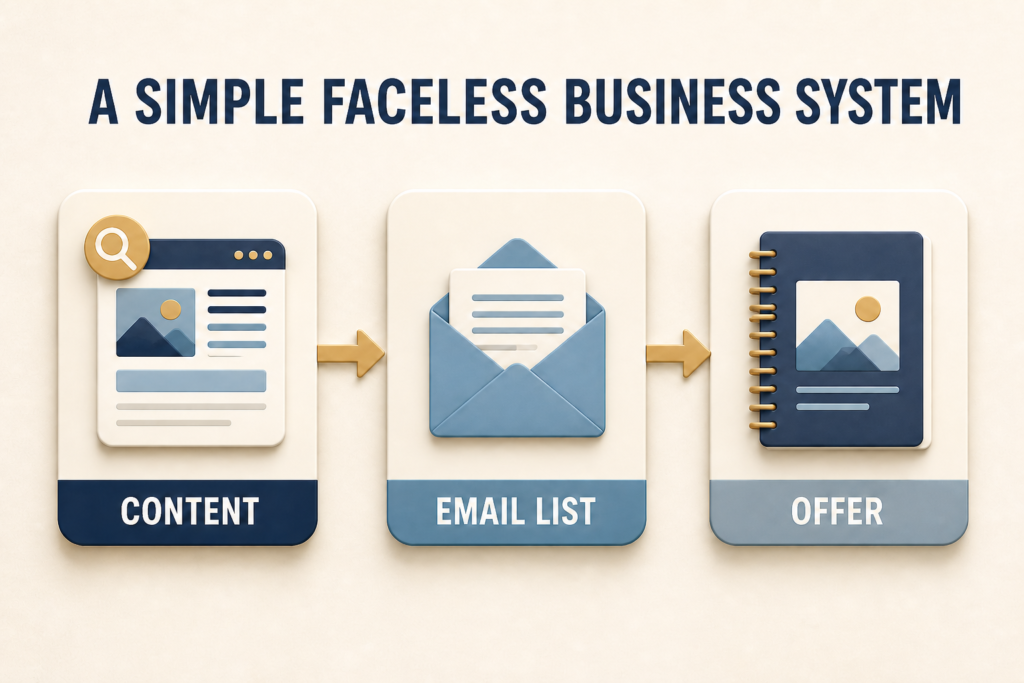
A simple faceless-business system might look like this:
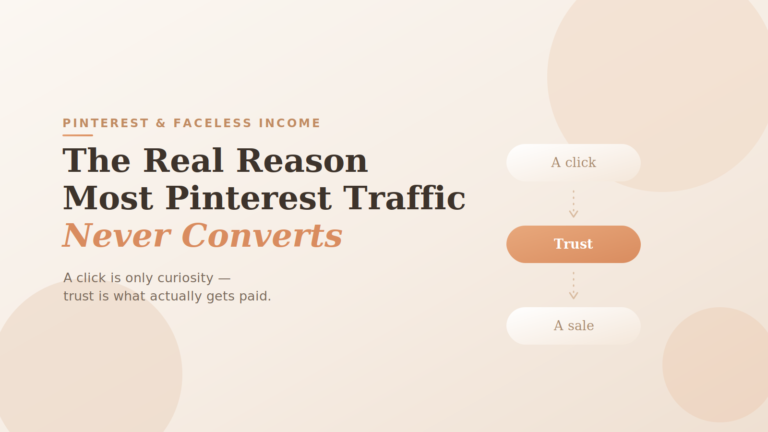
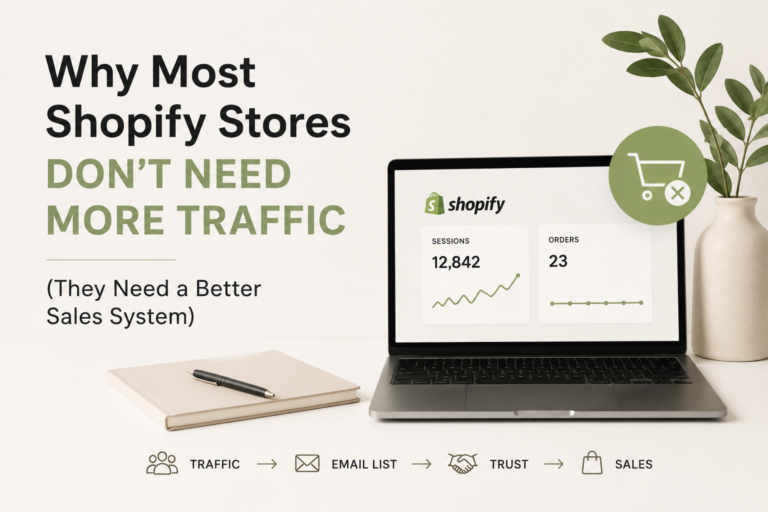
Pinterest or Google → Blog post → Email opt-in → Helpful email sequence → Relevant offer
You do not need a complicated funnel.
Start with:
- One audience
- One clear problem
- One content platform
- One lead magnet
- One email sequence
- One relevant offer
Read How to Build Your First Faceless Business Funnel for Free for the complete funnel setup.
Systeme.io can handle your landing pages, email list, automation, and product delivery without requiring several separate tools.
Create your free Systeme.io account →
Common Mistakes When Choosing a Business Idea
Trying several models at once
Do not start a newsletter, print-on-demand shop, YouTube channel, blog, and template store in the same week.
Choose one primary model and one traffic source.
Choosing an idea only because it looks passive
Most online businesses require significant work before any process becomes automated.
Choose a model based on the work you are willing to do—not only the result you hope to receive.
Copying another faceless brand
Study markets and formats, but do not copy someone else’s articles, products, graphics, or positioning.
Use your own research and create a clearer angle for a specific audience.
Buying too many tools
Start with the minimum system needed to publish, collect emails, and deliver your offer.
Upgrade only when a real limitation affects the business.
Waiting for the perfect niche
You need enough clarity to publish useful content, not absolute certainty about the next ten years.
Choose a reasonable direction and allow real audience feedback to refine it.
Your Next Step
Do not choose all 12 ideas.
Select the one that best matches:
- Your strongest or most interesting skill
- A problem people actively want to solve
- A format you can create consistently
- A realistic way to monetize
- A traffic source you are willing to learn
Then define the smallest version you can publish.
If you need help organizing your niche, business model, content direction, and first monetization path, use the Faceless Income Starter Blueprint to turn the idea into a clearer action plan.
Explore the Faceless Income Starter Blueprint →
Once you have chosen your direction, build the first system that connects your content, email list, and offer.
Start building with Systeme.io for free →
Frequently Asked Questions
What is the easiest faceless business to start?
Affiliate blogging, small digital downloads, and clearly defined online services can be accessible starting points. The easiest option depends on whether you prefer writing, designing, teaching, or providing a service.
Can a faceless business make money?
A faceless business can generate revenue through affiliate commissions, product sales, advertising, subscriptions, sponsorships, or services. Results are not guaranteed and depend on demand, content quality, traffic, trust, and execution.
Can I start a faceless business for free?
You can test some ideas with free tools, but you may eventually need to pay for a domain, hosting, design software, email features, payment processing, or marketplace fees. Start with essential tools and upgrade when necessary.
Do I need social media for a faceless business?
No. You need a traffic source, but it could be Google search, Pinterest, YouTube, email, online communities, partnerships, or paid advertising.
Can I use AI to run a faceless business?
AI can assist with research, brainstorming, outlines, editing, and workflow. You should still check accuracy, respect copyright, add original value, and follow the rules of every platform you use.
Is faceless business the same as passive income?
No. Faceless describes how the brand is presented publicly. It does not mean the business requires no work. Content creation, product development, customer support, optimization, and maintenance still require effort.
How do I build trust without showing my face?
Publish accurate content, demonstrate your process, disclose affiliate relationships, use consistent branding, provide clear product information, update outdated resources, and respond professionally to customer questions.
4 Comments