The Missing Step Between Clicks and Sales
Why attention doesn’t turn into income — and what actually does
I used to think the hardest part of building a faceless business would be getting attention.
More views. More clicks. More saves. More traffic. That’s what everyone online talks about, so that’s where I focused.
I redesigned pins. I rewrote hooks. I tested colors. I obsessed over analytics. And eventually… the clicks came.
But the income didn’t.
That was the confusing part. Because nobody really explains what’s supposed to happen between attention and money.
The myth most online creators believe
Most people online make it sound like this:
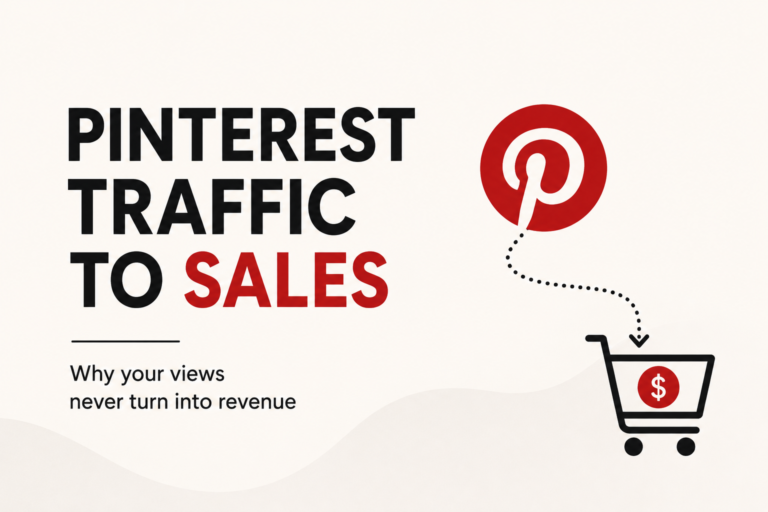
Pinterest Pin → Click → Income
Or:
YouTube Video → Views → Passive Income
But that’s not how it actually works. Not for most people, and definitely not for faceless brands trying to build something sustainable.
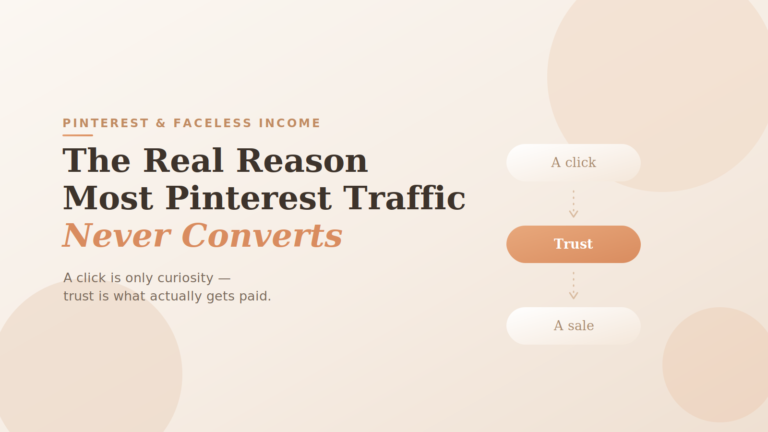
Here’s the truth: a click is not trust.
A person clicking your pin doesn’t mean they understand you, believe you, remember you, trust your solution, or feel emotionally connected to what you’re offering.
It means one thing only: you successfully interrupted their scroll for two seconds.
That’s it.
What the people actually making money do differently
Once I understood that, online income started making a lot more sense.
Because the people making real money online usually aren’t the ones with the most content. They’re the ones with the clearest system.
That system is called a funnel.
Not the complicated “internet marketer” version with 27 automations and confusing tech. I mean the simple version:
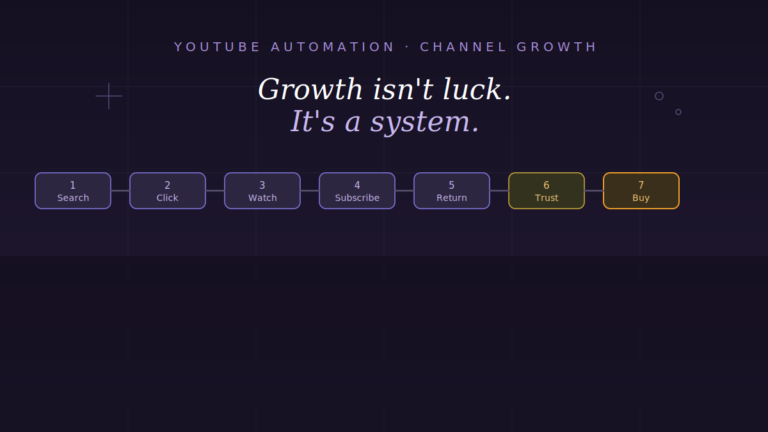
A funnel is just the path between attention and trust.
That’s the missing middle step most creators never build. And it’s why so many faceless accounts stay stuck in the same cycle — posting more, chasing views, jumping to new platforms, changing niches, tweaking content endlessly — while still making little to no income.
Because attention alone rarely converts. Trust does.
Why viral pins still don’t pay
Pinterest is amazing for attention. YouTube is amazing for attention. But attention without structure disappears fast.
That’s why someone can get thousands of views, have viral pins, and grow their followers — and still struggle to make sales.
The audience never had anywhere meaningful to go.
What a simple funnel actually looks like
This is where funnels change everything. A simple one might look like this:
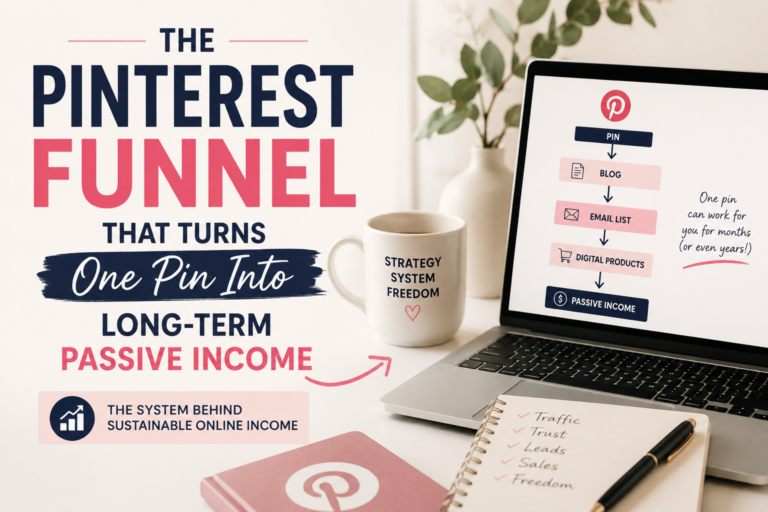
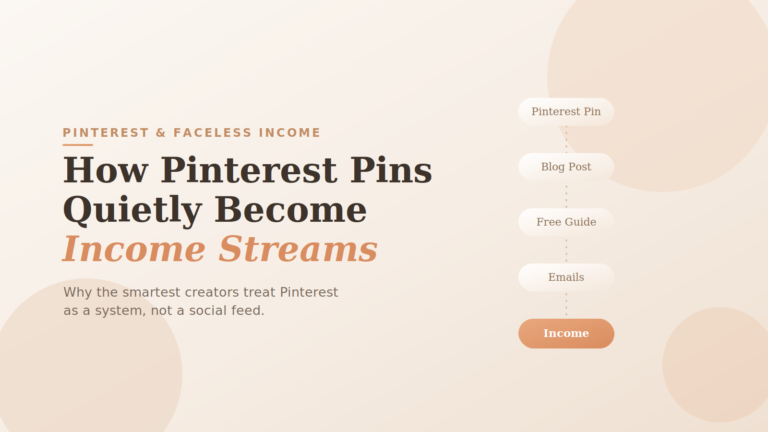
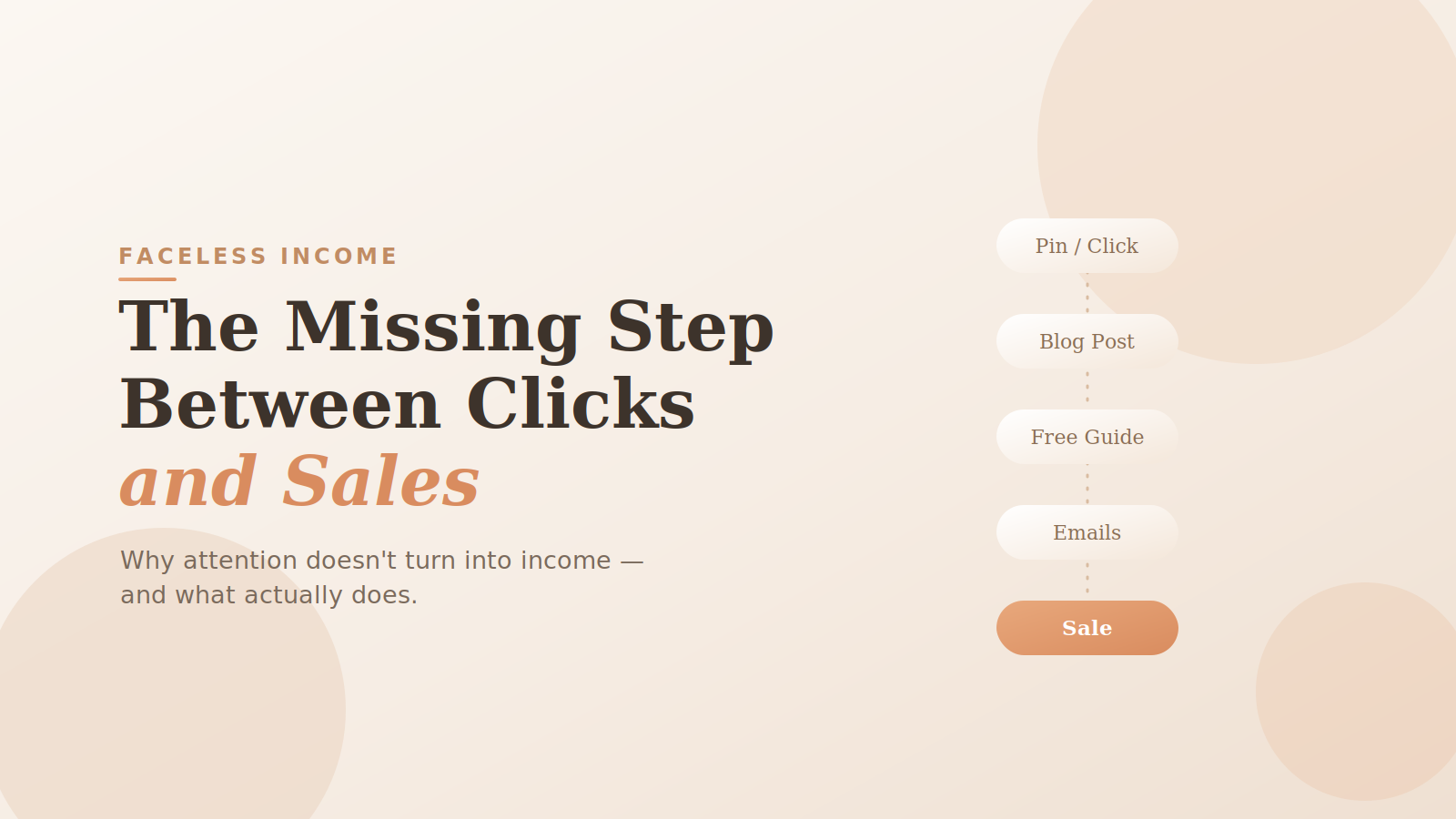
Pinterest Pin → Helpful Blog Post → Free Guide → Email Sequence → Offer
Notice something important? The sale happens at the end. Not immediately after the click.
Because the middle part is where trust gets built:
- The blog post creates clarity.
- The freebie delivers real value.
- The emails build familiarity.
- And familiarity is what creates buying decisions.
That’s the part most “passive income” content skips. They show you the result — but never the mechanism.
Why this was actually a relief
Honestly, understanding this took the pressure off. It meant I didn’t need more platforms, more hustle, more daily posting, or more complicated strategies.
I needed a clearer path. A system that helps people move from “I saw this pin…” to “I finally understand what I’ve been missing.”
That’s what funnels actually do. They bridge the gap between attention and income. And once you understand that, content stops feeling so random.
Want the simple version of this system?
Download the Faceless Income Starter Blueprint — a beginner-friendly guide that explains how faceless content, funnels, trust, and digital income actually connect.
It’s the framework I wish someone had shown me earlier.